
Compare 309S and 310S stainless steel to choose the right heat-resistant grade for furnaces, burners and high-temperature equipment, and learn the key ordering details.
When equipment must run red-hot, buyers reach for the 300-series heat-resisting grades, and 309S and 310S are the two most common. They look similar on paper as high-chromium austenitic stainless steels, but the chromium level that separates them sets very different temperature ceilings. Picking the cheaper 309S where 310S is required leads to premature scaling and failure, while over-specifying 310S wastes money. This guide helps you match the grade to the actual service temperature.
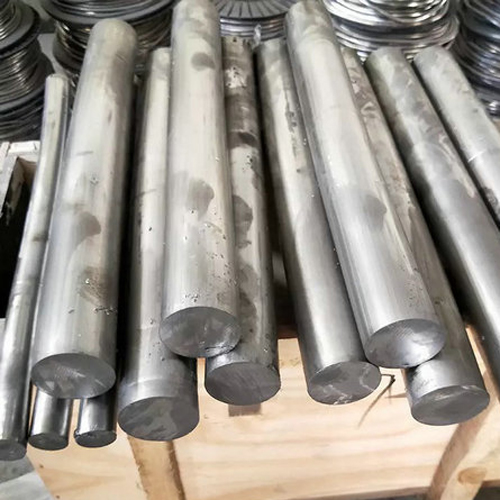
The Chromium Difference That Sets the Limit
309S carries about 22 to 24 percent chromium with roughly 12 to 15 percent nickel, giving it good oxidation resistance up to about 980 degrees Celsius in intermittent service. 310S raises chromium to about 24 to 26 percent and nickel to about 19 to 22 percent, which pushes the usable oxidation limit to roughly 1035 degrees Celsius and improves strength at the top of that range. The S suffix in both grades means low carbon, which reduces carbide precipitation and keeps them serviceable after welding and thermal cycling.
Where 310S Is the Safer Choice
If the application involves continuous service above roughly 1000 degrees Celsius, or cycling across a wide temperature range such as furnace linings, radiant tubes, burner nozzles, and heat-treat baskets, 310S is the correct choice. Its higher chromium and nickel resist not only oxidation but also carburization and sulfidation in many furnace atmospheres, and it holds its structure better through repeated heating and cooling. Specifying 309S in these duties to save cost usually results in scaling and early replacement.

Where 309S Is Enough
Below about 980 degrees Celsius, 309S offers nearly the same oxidation resistance at a lower alloy cost, so it is widely used for furnace parts, heat exchanger components, and burner hardware in the mid-to-upper temperature band. It is also a common choice as a weld filler when joining dissimilar stainless and low-alloy steels, because its chemistry accommodates the dilution from both sides. For these duties 310S would perform no better and cost more.
What to Confirm on the Order
State the grade with the S low-carbon variant explicitly, since the non-S higher-carbon versions are more prone to sensitization in thermal cycling. Confirm the product form and the applicable standard, such as ASTM A240 for plate or A479 for bar, and request the full chemistry on the mill test certificate so the chromium and nickel levels can be verified against the grade limits. Supplying the maximum service temperature and the atmosphere type, whether oxidizing, reducing, or carburizing, lets the supplier confirm that 309S or 310S is the correct match before production.