
Site bending looks attractive because it can reduce fittings and speed installation, but it is not something buyers should assume every carbon steel pipe can handle safely. Whether a pipe can be bent onsite depends on diameter, wall thickness, bend radius, manufacturing route, and service condition. A pipe that bends acceptably in one utility application may become risky in another where wall thinning, ovality, or cracking cannot be tolerated. Buyers should therefore think about bending before procurement, not after the pipe has already been delivered to the jobsite.
What Happens When Pipe Is Bent
When carbon steel pipe is bent, the outer wall stretches, the inner wall compresses, and the cross-section can lose roundness. If the bend radius is too tight for the pipe's dimensions and quality, the result may be excessive wall thinning, wrinkling, or cracking. This matters more in pressure-sensitive or code-controlled systems than in simple structural or utility work. Buyers considering seamless carbon steel pipe or standard ERW pipe should therefore ask whether the project expects cold bending, hot bending, or factory-made bends from the start.
It is also important to distinguish between simple alignment adjustment and real bend fabrication. Those are not the same operation, and they should not be treated as if they carry the same risk.
Why Buyers Should Raise the Question Early
If the job expects onsite bending, the pipe specification may need to reflect that reality through wall margin, product route, or fabrication planning. If the project does not want onsite bending, the PO should make that clear so the contractor does not improvise later. Too many site bending decisions happen because the original procurement did not match the actual route layout or fitting plan. That turns a purchasing omission into an installation risk.
For some projects, preformed bends or elbows are the cleaner option because they control geometry and reduce field uncertainty. For others, gentle onsite bending may be acceptable if the service is forgiving and the contractor is properly equipped.
A Practical Bending Review Before Ordering
- Ask whether the system expects onsite bending at all.
- Review bend radius against diameter and wall thickness.
- Check whether wall thinning or ovality is acceptable for the service.
- Separate structural utility bending from pressure-service bending decisions.
- Decide early whether factory bends or fittings are commercially safer.
Where bending is allowed, the project should still document the acceptable radius, inspection method, and responsibility for any resulting dimensional checks. That keeps the field team from improvising beyond what engineering intended. A written bending rule is much safer than a verbal assumption passed along after the material has already been delivered.
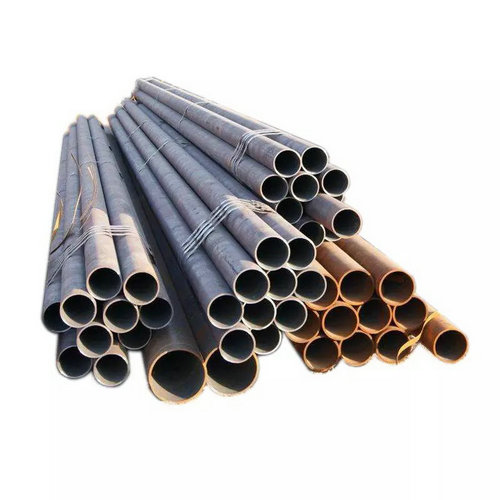
Buyers considering field bending often compare the fabrication route with stock items like ERW round steel pipe before deciding whether a formed bend or straight pipe package is better.
This review helps procurement support the installation method instead of forcing field teams to make risky decisions later. It also improves quotation accuracy if special bends or extra wall allowance are needed.

Buy with the Intended Fabrication in Mind
Baobin Steel can help buyers compare straight pipe, bend-friendly supply options, and project packaging that reflects how the goods will be installed in the field. That is valuable for projects trying to control both material cost and onsite risk.
Carbon steel pipe can be bent onsite in some situations, but not without consequences. Buyers who plan for radius, wall behavior, and service risk before ordering usually avoid the most expensive bending mistakes.
Where bending is allowed, the project should still document the acceptable radius, inspection method, and responsibility for any resulting dimensional checks. That keeps the field team from improvising beyond what engineering intended. A written bending rule is much safer than a verbal assumption passed along after the material has already been delivered.
Buyers considering field bending often compare the fabrication route with stock items like ERW round steel pipe before deciding whether a formed bend or straight pipe package is better.