
Water transfer projects often begin with a simple question that is not simple at all: should the line be built in carbon steel, ductile iron, or HDPE? Each material has strong use cases, and the right answer depends on diameter, pressure, site conditions, joining method, transport distance, and maintenance expectations. Buyers who default to one material without checking the project context usually end up comparing only the initial price per meter, which is not enough. The real decision should account for how the line will be installed, protected, inspected, and maintained over its service life.
Where Carbon Steel Pipe Stands Out
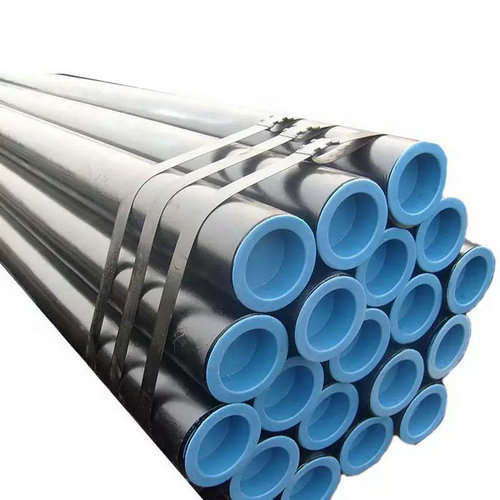
Carbon steel pipe remains highly attractive when the project needs mechanical strength, fabrication flexibility, and a wide choice of diameters and wall thicknesses. It can be welded into custom layouts, adapted to crossings and fittings, and supplied in multiple standards depending on the pressure and project language. Buyers considering carbon steel pipe options often like the material because it fits industrial construction methods and is familiar to many contractors. With the right finish and packing, it also travels well in export supply chains.
The trade-off is corrosion management. Carbon steel usually needs external protection and, depending on the water chemistry, internal lining or corrosion planning as well. That means material choice should be tied to the environment rather than treated as a raw-strength decision only.
When Ductile Iron or HDPE May Be Better
Ductile iron is often attractive for municipal water networks because it combines robust mechanical behavior with a long history in buried distribution systems. HDPE can be appealing where flexibility, lower joint count, corrosion resistance, and easier handling are priorities. Both materials can outperform carbon steel in the right setting. The mistake is assuming they outperform it everywhere. Large industrial sites, complex fabricated systems, and applications needing welded custom layouts often keep carbon steel competitive or clearly preferable.
From a commercial perspective, the winner often depends on the site. A long buried municipal line may lean toward ductile iron or HDPE. A plant project with multiple tie-ins, custom spools, and structural interactions may lean toward steel because the installation team already works in welded systems.
A Better Comparison Framework
- Check the pressure requirement and how the line will be joined.
- Review corrosion environment and whether coating or lining is needed.
- Consider transport distance, lifting equipment, and site access.
- Compare lifecycle cost, not just raw material price.
- Ask which material local contractors can install and repair efficiently.
For larger transmission-style water work, buyers can also compare welded options such as large-diameter spiral steel pipe when steel remains under consideration.
This framework keeps the choice grounded in project reality. Buyers should also avoid mixing material categories in one RFQ unless each line item is clearly defined. Otherwise, supplier offers become impossible to compare and the project team wastes time debating numbers that do not represent the same installation method.

Choose the Material That Matches the Site, Not the Trend
Baobin Steel can support buyers who need carbon steel pipe quotations with realistic discussion of coating, packing, and export delivery, so the comparison with alternative materials is based on total project logic rather than headline ton price. That is especially useful when the project is somewhere between municipal utility work and industrial process construction.
Carbon steel pipe, ductile iron, and HDPE all win in the right context. For water transfer projects, the best material is the one that fits the pressure, installation method, corrosion environment, and contractor capability of the actual site.
For larger transmission-style water work, buyers can also compare welded options such as large-diameter spiral steel pipe when steel remains under consideration.