
Pipe buyers often focus on size and grade while leaving length as a secondary note, yet length choice can shift total project cost more than expected. The usual commercial decision is between random length, which follows mill production ranges, and fixed length, which is cut to a defined measurement such as 6 meters or 12 meters. The best option depends on how the pipe will be processed, shipped, and installed. For stock orders, random length often provides better mill efficiency and price. For fabrication-heavy jobs, fixed length can reduce cutting waste and make installation more predictable. Buyers sourcing from the carbon steel pipe product category should treat length as a cost-control tool, not just a logistics detail.
Why Mills Prefer Random Length
Random length is usually the natural output of the rolling and finishing process. Because the mill does not need to cut every piece to an exact target, yield is better and production moves faster. That often translates into a lower base price and shorter availability. For distributors who resell pipe in mixed destinations, this is often the most economical buying format. They can receive the material sooner and then cut or repackage it according to customer demand.
The drawback is predictability. If a project needs exact spool planning or repetitive installation lengths, random material increases site cutting, scrap, and handling. That cost does not appear directly in the mill quote, but it appears later in labor and material loss. Buyers who ignore this often think they saved money on procurement while actually increasing installed cost.
When Fixed Length Pays Off
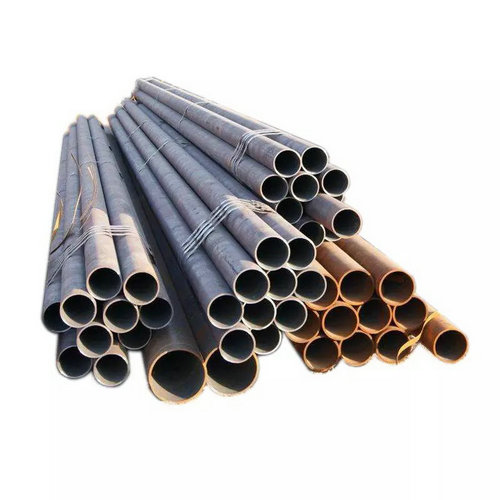
Fixed length pipe makes the most sense where repetitive lengths dominate the project. Prefabrication shops, mechanical contractors, and modular builders often gain more from consistent length than from the lowest piece price. Straightforward layout, lower cutting waste, easier bundle counting, and faster site installation can easily justify the premium. This is especially true if the job already uses standardized supports, recurring spool lengths, or preassembled racks.
Fixed length can also improve freight planning. A buyer who knows the exact piece length can load containers more efficiently and calculate how many pieces fit per bundle and per container. For some orders, a mix strategy works best: critical lines in fixed length and general stock in random length. Even buyers considering ERW carbon steel pipe for general service can benefit from this approach because the logistics and cutting economics are often more important than the small difference in mill processing cost.
How to Compare Total Cost, Not Just Mill Price
- Compare the mill surcharge for fixed length.
- Estimate field cutting hours and scrap rate if you choose random length.
- Check whether exact lengths improve container loading efficiency.
- Review whether fittings and spool drawings assume standard cut lengths.
- Consider whether the destination warehouse can easily handle mixed random bundles.
Once these factors are priced honestly, the cheapest quoted pipe is not always the lowest-cost option. For example, a fabrication workshop may lose more money cutting and sorting random lengths than it would ever save at purchase. By contrast, a wholesaler carrying varied inventory may prefer random lengths because downstream customers will cut to suit their own jobs anyway.

What to Put in the Purchase Order
If fixed length is required, write the exact length, tolerance, and whether the length is measured before or after end preparation. If random length is acceptable, define the acceptable mill range instead of leaving the wording open. That prevents disputes later when bundles arrive with piece lengths outside the buyer's planning assumptions. The PO should also state bundle marking and packing rules if the project team needs to separate lengths after arrival.
Baobin Steel works with both distributors and project buyers that need mixed-size, mixed-length shipments. When the commercial goal is clear, the order can be structured to balance mill efficiency, freight control, and installation speed rather than forcing one length strategy onto every line item.
Random length is usually the best price for stock and flexible resale. Fixed length is often the better decision for projects that want lower waste and smoother installation. Buyers who compare total installed cost instead of piece price alone make the smarter choice.