
Understanding steel sheet specifications is essential for engineers, fabricators, and procurement specialists involved in material selection across industries such as construction, automotive, and aerospace. While steel sheets may appear uniform at first glance, their performance is heavily influenced by three core parameters: thickness, tolerance, and surface finish. Each of these factors plays a critical role in determining the sheet’s suitability for a given application, its manufacturability, and its long-term durability.
Thickness is one of the most fundamental specifications in steel sheet manufacturing. It is typically measured in millimeters (mm) or gauge (in imperial systems), with common industrial thicknesses ranging from 0.3 mm (very thin for electronics or automotive trim) to 6 mm and beyond for structural components. Precision in thickness directly affects mechanical properties such as tensile strength, bending behavior, and weight. For example, thinner sheets are ideal for lightweight applications like HVAC ducting or roofing panels, while thicker sheets are used in heavy-duty platforms, shipbuilding, and industrial flooring.
Manufacturers often refer to nominal thickness, which is the intended design thickness, but actual thickness can vary within acceptable limits defined by international standards. For instance, ASTM A480 governs thickness tolerances for stainless steel sheets, while ASTM A568 covers carbon steel. These standards ensure consistency across global supply chains and reduce rework due to dimensional inaccuracies. At Baobin Steel, every steel sheet undergoes laser-guided thickness profiling to maintain compliance with these stringent benchmarks, ensuring reliability in high-stakes environments.
Tolerance refers to the allowable deviation from the specified thickness, flatness, width, and length. Tighter tolerances are crucial in precision engineering, where even micron-level variations can lead to assembly failures or performance degradation. For example, in semiconductor manufacturing, ultra-precise steel sheets are used as base substrates, requiring thickness tolerances as tight as ±0.02 mm. In contrast, general fabrication may accept ±0.15 mm.
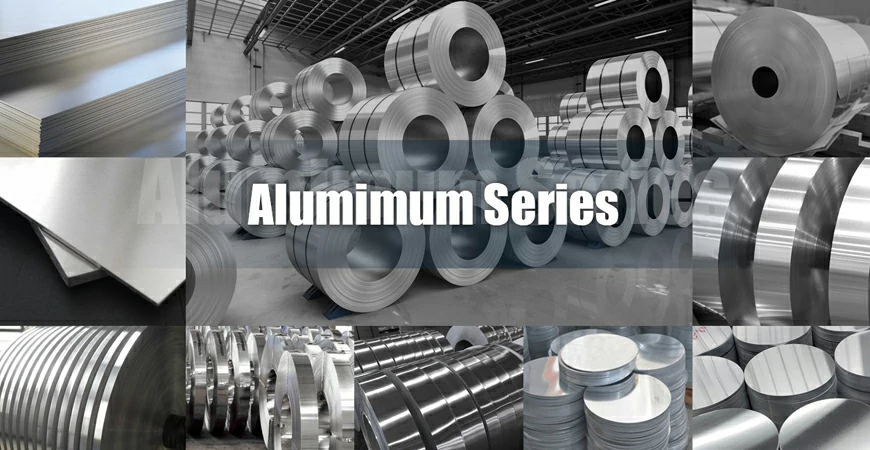
Flatness tolerance is another critical dimension. It measures how much a sheet deviates from a perfectly flat plane, typically expressed in terms of waves per meter or total deviation across the surface. Excessive flatness issues can cause problems in automated welding, stamping, or coating processes. Advanced leveling technologies, such as tension leveling and roller leveling, are employed to minimize these deviations. Baobin Steel utilizes multi-stage leveling systems to achieve flatness tolerances that meet or exceed EN 10051 and JIS G 3193 standards, ensuring optimal performance in downstream operations.
Surface finish is often the most visible yet misunderstood specification. It influences not only aesthetics but also corrosion resistance, paint adhesion, weldability, and friction characteristics. Common surface finishes include:
- 2B Finish: A bright, cold-rolled, lightly polished finish typical in stainless steel, offering good corrosion resistance and a smooth appearance.
- No. 1 Finish: A hot-rolled, annealed, and pickled finish used in structural applications where surface quality is less critical.
- BA (Bright Annealed): A highly reflective finish achieved through annealing in a controlled atmosphere, ideal for decorative and medical applications.
- Brushed or Dull Polish: A satin-like texture that reduces glare and hides scratches, commonly used in architectural cladding.
The surface roughness, measured in Ra (arithmetic average roughness), is quantified using profilometers. For instance, a 2B finish typically has an Ra value between 0.3 and 0.6 μm, while a brushed finish may range from 0.8 to 2.0 μm. Selecting the appropriate finish depends on end-use requirements. For example, food processing equipment demands low Ra values to prevent bacterial retention, while outdoor architectural panels benefit from finishes with enhanced weathering resistance.
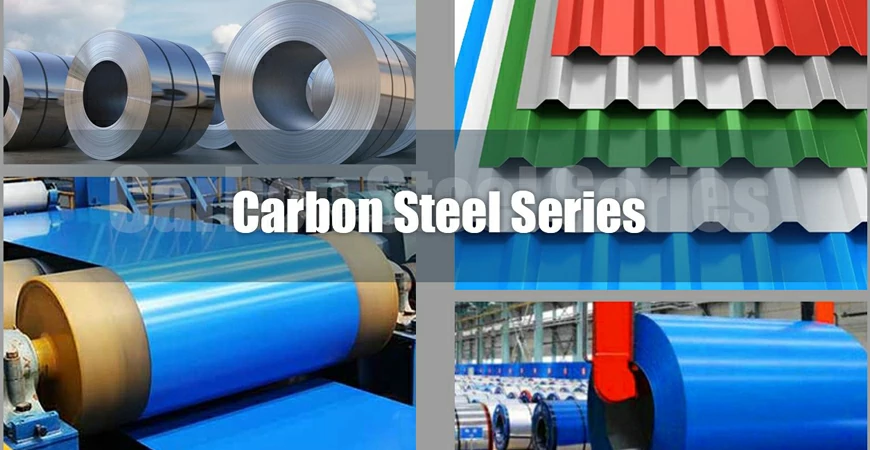
Surface quality also includes the presence of defects such as scratches, scale, pitting, or edge burrs. International standards like ISO 9445-2 provide defect classification and acceptance criteria. Baobin Steel implements inline vision inspection systems to detect and remove sheets with surface imperfections, maintaining a defect rate below 0.5%—a key reason why their products are trusted in over 100 countries.
For deeper technical insights, refer to the Wikipedia article on sheet metal, which provides a comprehensive overview of forming processes and material behavior under deformation.
Ultimately, selecting the right steel sheet requires a holistic understanding of thickness, tolerance, and surface finish—not in isolation, but as interdependent variables. Whether sourcing for high-precision instruments or large-scale infrastructure, partnering with a manufacturer that controls every stage of production, from raw material selection to final inspection, ensures consistent quality and traceability. With over 30 years of metallurgical expertise and a global distribution network, Baobin Steel delivers certified, application-optimized steel sheets engineered to exceed performance expectations across industries.