
ASTM A53 and ASTM A500 are both widely used carbon steel tubing and pipe standards, but they are not designed for the same job. Buyers still mix them up because both can appear in structural applications, especially when a project uses round members, frames, posts, or support steel. The confusion usually starts when procurement receives a drawing that says pipe in one place and hollow section in another. If the team buys purely by lowest price without checking the governing standard, the shipment may arrive with the wrong dimensions, the wrong testing basis, or a product that complicates fabrication. Structural buyers should therefore compare A53 and A500 by function first, not by name alone.
What Each Standard Was Meant to Do
ASTM A53 is traditionally associated with pipe for mechanical and pressure-related service, though it also appears in structural and general utility use. It is organized around nominal pipe size and schedule concepts. ASTM A500, by contrast, is a structural tubing standard used heavily for square, rectangular, and round hollow sections in buildings, frames, and support structures. It is the more natural choice when the product is functioning as a structural member rather than a process line.
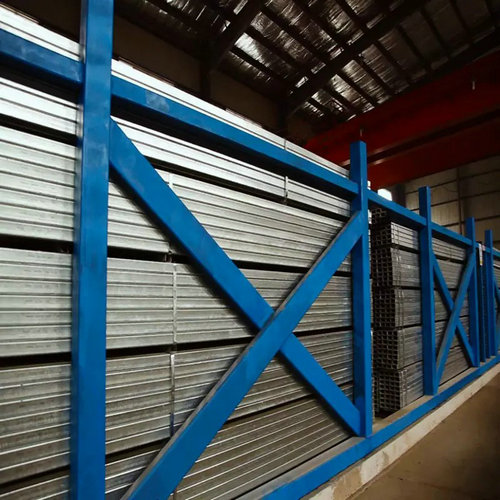
This difference matters at quotation stage. A53 products are often compared through pipe sizes and schedules, while ASTM A500 structural square pipe is usually quoted by direct outside dimensions and wall thickness. If the project team treats those systems as interchangeable, supplier offers become hard to compare and detailing problems show up later in the workshop.
Where A53 Still Makes Sense
A53 is still useful in structural projects when the member is genuinely pipe-based, such as posts, sleeves, bollards, general supports, or cases where matching pipe fittings and standard pipe accessories is convenient. Some buyers also use A53 because stock availability in round pipe sizes is strong and the product is familiar to both distributors and contractors. Existing guidance such as your ASTM A53 ERW pipe article can help buyers understand the commercial background, but that does not mean A53 is the best answer for every frame or canopy.
If the project is dominated by square or rectangular hollow sections, A500 is usually the better structural language. It lines up more naturally with connection plates, shop drawings, and dimensional control in fabricated frames. That makes life easier for engineers, fabricators, and installers even when the base steel chemistry looks broadly similar.
How Structural Buyers Should Choose
- Choose A53 when the item is truly pipe-based or must align with standard pipe sizing and accessories.
- Choose A500 when the member is a structural hollow section and fabrication geometry matters more than pipe-standard fittings.
- Separate round pipe items from SHS and RHS items in the RFQ.
- Check whether drawings are written in nominal pipe sizes or direct outside dimensions.
These checks make procurement more accurate and reduce follow-up questions from suppliers. They also prevent the common mistake of using A53 simply because it is familiar, even though the project is clearly structural in nature. In many export orders, the wrong standard creates more delay than the price difference ever would.

Commercially, the Best Standard Is the One That Matches the Drawing
Procurement should avoid asking suppliers to interpret vague structural pipe wording on their own. Instead, state whether the item is for piping service or structural framing, then choose the standard that fits that role. Baobin Steel can support mixed orders that include both round carbon steel pipe and structural hollow sections, which helps buyers place one coordinated order without mixing standards line by line.
ASTM A53 and ASTM A500 are both valuable, but they solve different problems. For structural projects, A500 usually wins when the product is a hollow section member. A53 remains useful when the project genuinely wants pipe-based dimensions, accessories, or stock availability. The key is to make that decision deliberately instead of letting habit choose for you.