
Structural buyers frequently compare round pipe with square hollow section (SHS) and rectangular hollow section (RHS), especially when a project needs both strength and clean fabrication. On paper, these products can look similar because all are hollow steel sections. In practice, the section shape changes connection design, torsional behavior, coating efficiency, visual appearance, and how easy the frame is to fabricate. Ordering the wrong section does not just affect price; it can complicate welding, slow installation, and create mismatches with connection plates or architectural details. That is why buyers should understand the role of round pipe versus structural hollow sections before asking for quotes on ASTM A500 structural square pipe or other hollow profiles.
How the Shape Changes Performance
Round pipe performs very well where loads come from multiple directions, where torsional resistance matters, or where the design benefits from a smooth profile. It is common in columns, piles, handrail supports, and some utility structures. SHS is often preferred where symmetry in both directions is useful, making connection detailing simpler for columns, frames, and modular structures. RHS is popular when the load direction is stronger in one axis than the other, or when the designer wants a flatter face for connection plates, cladding lines, or architectural alignment.
From a fabrication perspective, flat faces on SHS and RHS make cutting, drilling, and bolting easier for many workshops. Round pipe, however, can offer cleaner flow in exposed structures and may be preferred for braces or systems where appearance matters. Buyers should not assume that one section is universally cheaper, because price depends on standard, wall thickness, coating, and local mill availability as much as the shape itself.
Connection and Coating Considerations
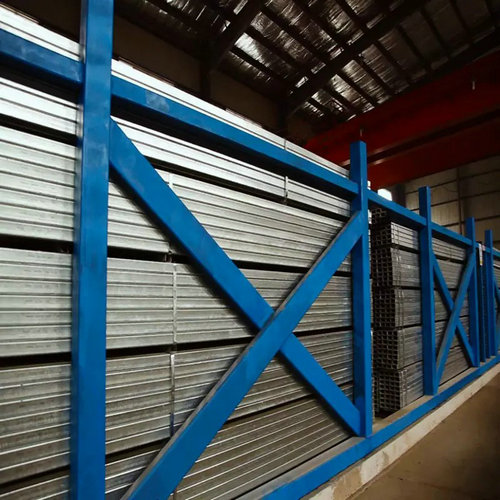
Connection design often decides the product faster than raw section properties. SHS and RHS provide flat surfaces that simplify plates, gussets, and base connections. Round pipe may need saddles, shaped plates, or more specialized cutting for accurate fit-up. That extra workshop effort can offset a lower material cost. Coating is another factor. Galvanizing or painting flat-sided sections is usually straightforward, while round pipe may have different drainage and handling needs depending on the fabrication sequence.
For outdoor agricultural or light structural projects, buyers often compare black structural sections with galvanized square and rectangular steel tube because the finish changes maintenance cost. If appearance, corrosion resistance, and easier bolt-up are priorities, SHS or RHS may be the better commercial choice even if round pipe is technically possible.
Where Buyers Usually Get It Wrong
- Using the word pipe for all hollow sections and expecting identical quoting rules.
- Comparing round NPS pipe with direct metric SHS dimensions without separating standards.
- Ignoring the effect of connection detailing on fabrication hours.
- Selecting round pipe for a frame that would be easier and cheaper to build in SHS or RHS.
- Choosing SHS or RHS for a job that needs the torsional advantages of round sections.
This confusion is common in mixed international projects, where procurement receives a drawing package with both nominal pipe sizes and metric hollow-section sizes. Buyers who put all these items into one generic steel list often receive uneven quotations and unnecessary clarification questions from suppliers.

How to Choose the Right Section
Start with the function of the member, not the name of the product. If the design needs fluid service or pipe-standard fittings, use round pipe. If the design is structural and connection simplicity matters, review SHS or RHS first. State the applicable standard, section dimensions, wall thickness, coating, and length tolerance clearly in the RFQ. For projects that mix general pipe and structural hollow sections, create separate line groups instead of asking suppliers to interpret the difference later.
Baobin Steel supports buyers with both round carbon steel pipe and structural hollow section supply, which is useful when one project contains utility lines, frames, canopies, and support steel in the same purchase package. That makes comparison easier and helps procurement avoid mixing standards by accident.
Round pipe, SHS, and RHS each solve a different structural problem. When buyers match section shape to load path, fabrication method, and corrosion environment, they get a cleaner project and a more accurate quotation from the beginning.